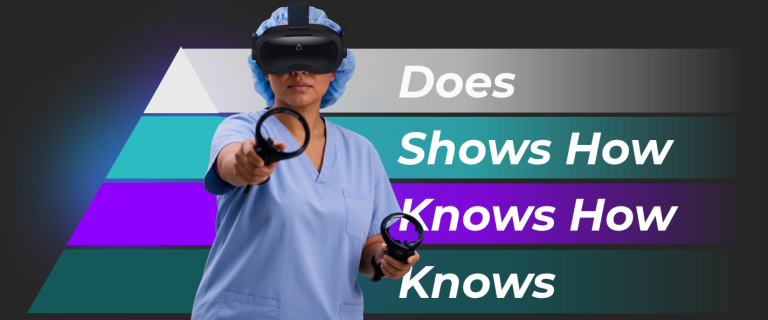
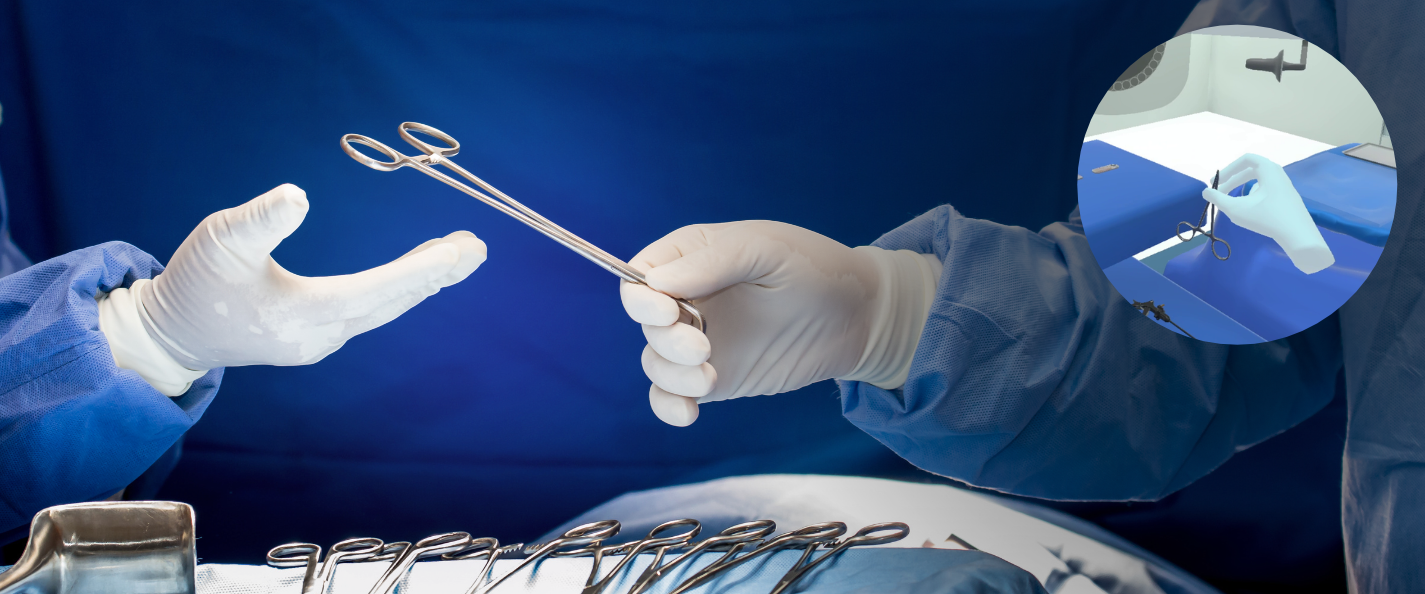
Preparing Surgical Technology Students takes more than teaching them to identify instruments. Students must connect that knowledge to surgical procedures, apply sterile technique, anticipate the surgical team’s needs, and demonstrate their skills in practice.
For Educators, the challenge is providing enough consistent practice, and meaningful feedback, to help each Student progress.
PeriopSim supports that progression through repeatable virtual surgical simulation reinforcing objectives addressed in the Association of Surgical Technologists’ Core Curriculum for Surgical Technology.
AST Curriculum Alignment
The Association of Surgical Technologists (AST) publishes the Core Curriculum for Surgical Technology. The Commission on Accreditation of Allied Health (CAAHEP) accredits surgical technology programs upon the recommendation of the Accreditation Review Council on Education in Surgical Technology and Surgical Assisting (ARC/STSA).
ARC/STSA required full implementation of the seventh edition of the curriculum by August 1, 2024. Its guidance states that surgical technology programs must use that edition in its entirety.
CAAHEP’s standards establish expectations for preparing entry-level surgical technologists across three learning domains: knowledge, physical skills, and professional behaviors. They also require sufficiently detailed Student evaluations to document learning progress and achievement.
PeriopSim gives Educators an additional way to reinforce relevant learning objectives and gather evidence of performance in a safe, simulated environment.
The following connections illustrate how Educators can incorporate PeriopSim into their curriculum. They are an educational interpretation of the curriculum and product capabilities, rather than an official AST or CAAHEP product endorsement.
From Instrument Recognition to Procedural Application
The AST Core Curriculum requires that each segment of a surgical technology program include objectives addressing cognitive, psychomotor, and affective skills.
PeriopSim supports the psychomotor domain through interactive virtual simulation, providing opportunities for kinesthetic and experiential learning through safe practice and trial and error.
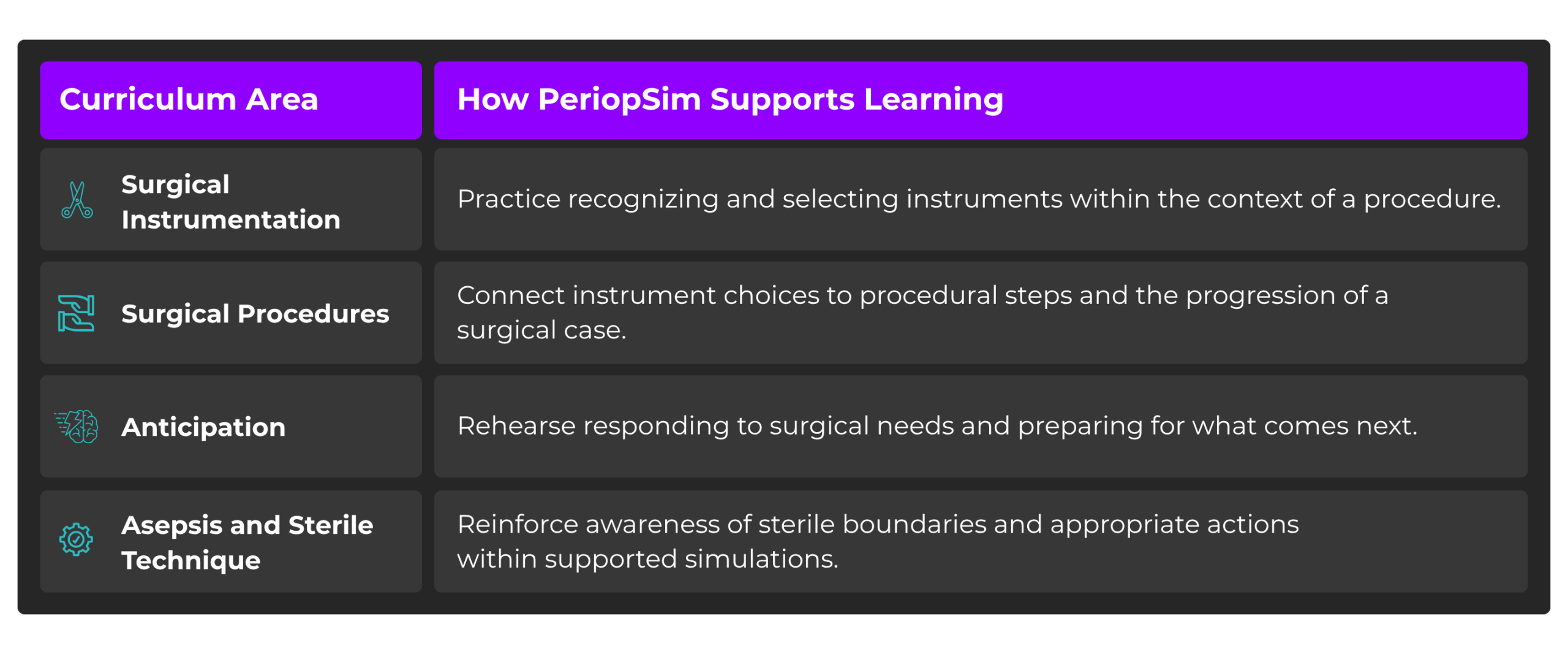
Learning experiences follow a simple-to-complex progression, moving from basic instrument recognition to more advanced procedural steps and surgeon anticipation. Recognizing an instrument in a textbook is an important starting point, but understanding when and why that instrument is needed during a surgical procedure adds another layer of learning.
PeriopSim places instrument recognition within the context of virtual surgical experiences, allowing Students to connect foundational knowledge with procedural application.
Performance assessments of psychomotor objectives should evaluate observable skills and the steps taken to achieve the desired outcome, not simply the final result.
PeriopSim generates objective, quantitative performance data that allows Educators to evaluate Student performance and monitor progress throughout repeated practice.
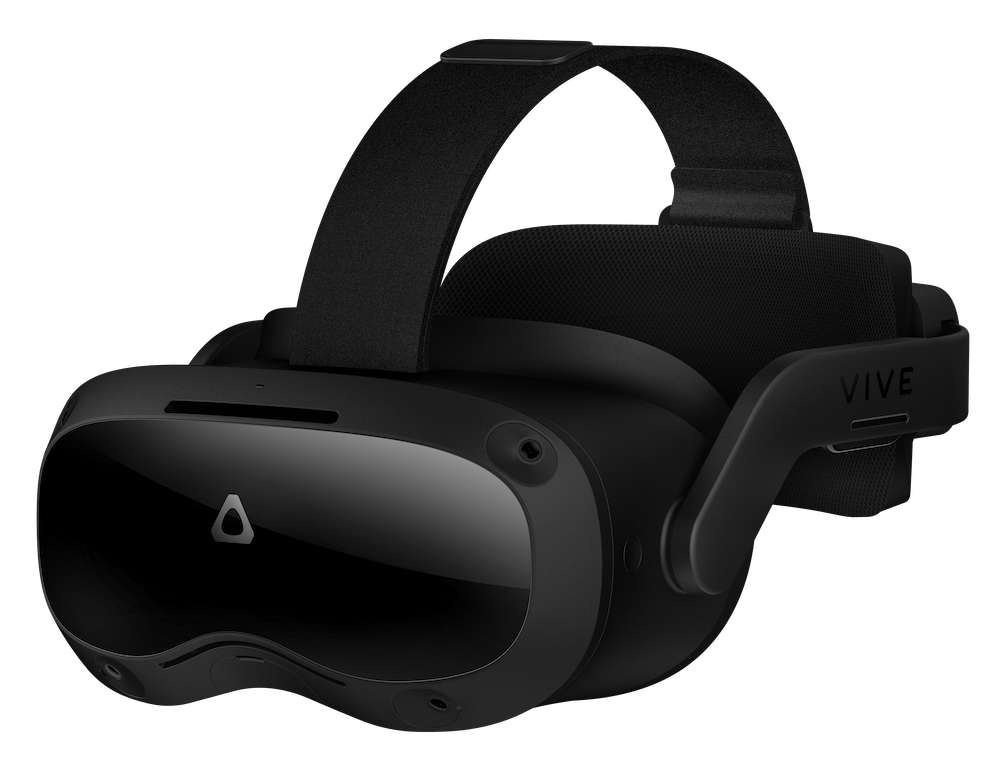
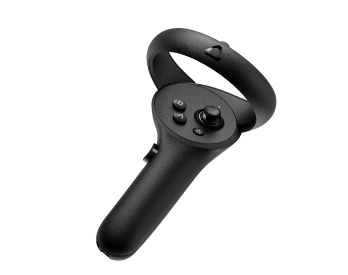
These learning experiences reinforce curriculum content related to surgical instrumentation, procedural sequencing, instrument passing, anticipation, and maintenance of sterile technique. The specific learning objectives addressed depend on the simulation selected. Available through VR, desktop, and tablet formats, PeriopSim provides additional opportunities for Students to practice safely and strengthen their knowledge before entering clinical settings.
Strengthening Clinical Readiness and Maximizing Lab Time
Teaching surgical procedures presents unique challenges due to the complexity of procedural steps, variations in patient anatomy, and limited clinical laboratory access. While traditional resources such as instructional videos and basic simulators help introduce foundational concepts, they may lack the interactive depth needed to help Students understand how procedures unfold.
PeriopSim addresses these challenges through an expanding library of virtual surgical procedures. Within interactive simulations, learners practice procedural sequencing, instrument timing, anticipation of surgical needs, and recognition of relevant anatomy throughout a case. These experiences help Students connect foundational knowledge with the application of skills in a surgical setting.
Educators can incorporate simulation into their curriculum by introducing instrumentation in the classroom, assigning a related virtual simulation, and then reinforcing physical instrument handling and passing during laboratory sessions. This approach also supports a flipped classroom model, allowing Students to complete simulations independently before scheduled lab sessions. As a result, Educators can dedicate more hands-on lab time to advanced skills and application of knowledge rather than foundational instruction.
At Horry-Georgetown Technical College, Educators use PeriopSim to help Students understand the surgical technologist role during virtual cases. The platform evaluates anticipation and sterile technique while providing feedback on student performance and opportunities to strengthen understanding of surgical phases and procedural sequencing. This helps bridge classroom learning with the expectations of laboratory and clinical training.
“This kind of preparation increases the students’ skills and knowledge, increases clinical efficiency, and increases patient safety,” explained Erin Ivey, HGTC Assistant Chair and Program Director of Surgical Technology. “The students receive a level of understanding and knowledge that was not obtainable before simulation” (Horry-Georgetown Technical College, 2023).
Using Assessment to Guide the Next Learning Activity
Repeated practice is most useful when it informs what happens next.
Educators can use real-time simulation performance information to identify areas for review, assign additional practice, and focus subsequent instruction. For example, a Student who struggles with instrument selection may need a different learning activity from a Student who recognizes instruments accurately but struggles with anticipation.
A practical teaching sequence is:
- Teach the relevant concepts.
- Assign a simulation matched to the lesson.
- Review performance and discuss learning gaps.
- Repeat targeted practice.
- Validate physical skills and clinical application through faculty observation.
Simulation results contribute to the student’s learning record alongside examinations, laboratory assessments, and clinical evaluations.
The value of simulation-based education in enhancing learning outcomes has been confirmed in several research studies. In a recent study of 93 nurses conducted by Dalhousie University, Group A completed tablet-based PeriopSim Instrument and Surgical Simulations prior to live clinical training. It was found that Group A “were 23% quicker in identifying real instruments and did so with better accuracy 93.2% vs 80.6% than group B” (Clarke et al., 2020).
Strengthen Preparation Across the Learning Journey
PeriopSim’s contribution is specific: it provides additional opportunities to practice and assess selected aspects of the scrub role in a safe, simulation-based environment.
Physical instrument handling, tactile feedback, patient interaction, teamwork, and professional behavior still require appropriate hands-on instruction and observation. Virtual simulations cannot fully replace required clinical cases or establish complete entry-level competence.
How much virtual simulation is appropriate and ideal? “The NCSBN National Simulation Study: A Longitudinal, Randomized, Controlled Study Replacing Clinical Hours with Simulation in Prelicensure Nursing Education,” provided substantial evidence that “substituting high-quality simulation experiences for up to half of traditional clinical hours” resulted in comparable educational outcomes, helping new graduates become ready for clinical practice.
Used within a thoughtfully mapped curriculum, simulation and assessment can help Educators connect foundational knowledge to procedural application and make Student progress more visible and more rapid.
The goal is stronger preparation: Students who have practiced safely, received feedback, and addressed learning gaps before entering the live clinical environment.
References

Accreditation Review Council on Education in Surgical Technology and Surgical Assisting. (2023). Standards and guidelines for the accreditation of educational programs in surgical technology.

Association of Surgical Technologists. (2021). Core curriculum for surgical technology (7th ed.).

Clarke DB, Galilee AI, Kureshi N, Hong M, Fenerty L, D'Arcy RCN. Knowledge transfer and retention of simulation-based learning for neurosurgical instruments: a randomised trial of perioperative nurses. BMJ Simul Technol Enhanc Learn. 2020 Sep 1;7(3):146-153. doi: 10.1136/bmjstel-2019-000576. PMID: 35518567; PMCID: PMC8936786.

Hayden J, Smiley R, Alexander M … The NCSBN National Simulation Study: A Longitudinal, Randomized, Controlled Study Replacing Clinical Hours with Simulation in Prelicensure Nursing Education, Journal of Nursing Regulation , 5, S3-S40

Horry-Georgetown Technical College. (2023). Surgical technology program using simulation technology.

Mangold, T. (n.d.). Teaching surgical procedures. Association of Surgical Technologists.